Holi is one of India’s most vibrant and joyful festivals. Popularly known as the Festival of Colours, Holi celebrates happiness, unity, forgiveness, and the victory of good over evil. Beyond colours and celebration, Holi carries deep cultural, spiritual, and social meaning that has evolved over centuries.
This complete guide explains everything you need to know about Holi – its origin, rituals, regional traditions, food, safety tips, and how it is celebrated in modern India.
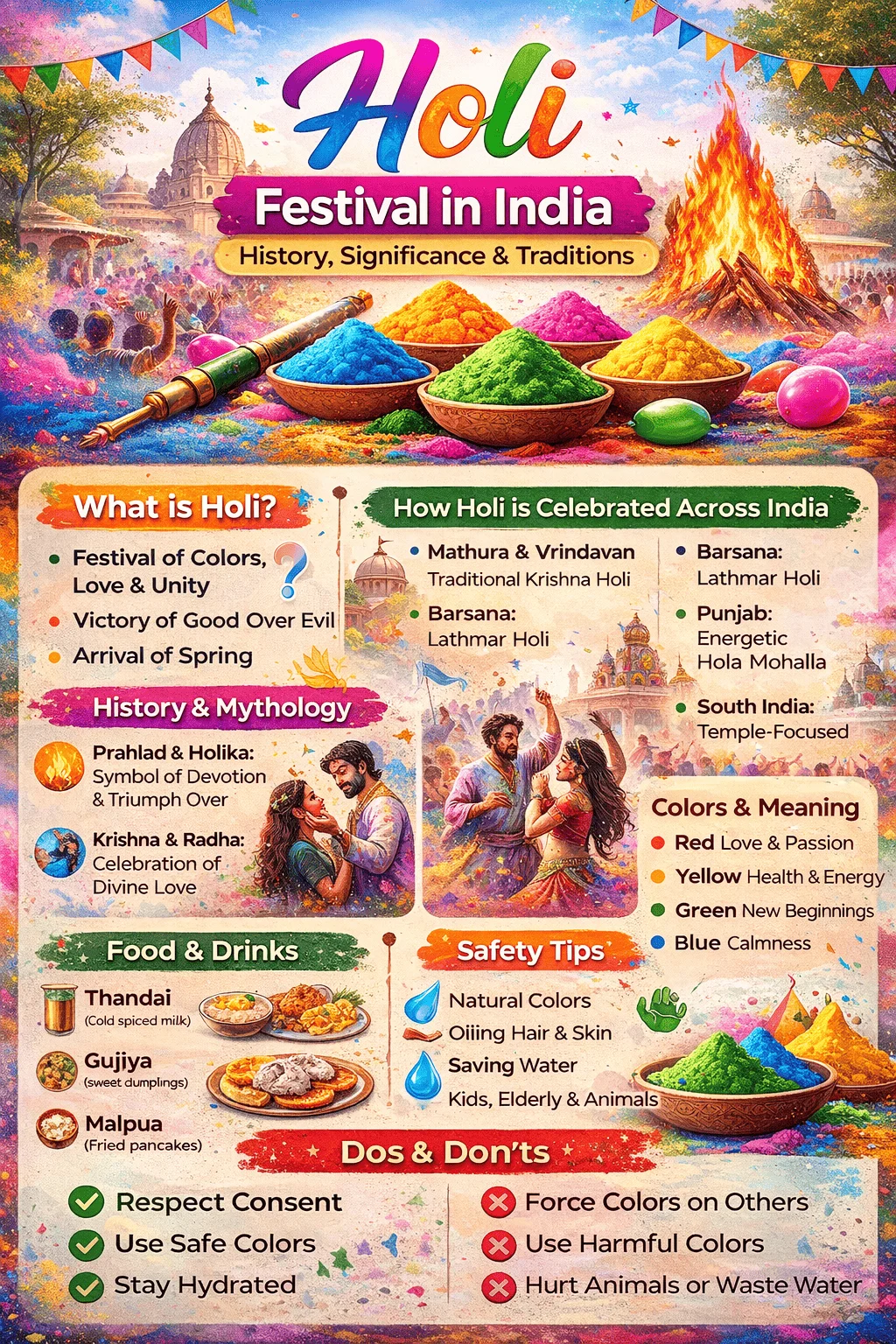
What Is Holi? Meaning & Importance
Holi is a Hindu spring festival that marks the end of winter and the arrival of spring. It represents:
-
New beginnings
-
Breaking social boundaries
-
Spreading joy, love, and togetherness
People celebrate Holi by playing with colors, sharing sweets, dancing, and reconnecting with family, friends, and communities.
(To more about Holi, you can click “What Is Holi? Meaning, Importance & Why It Is Celebrated” here.)
When Is Holi Celebrated in India?
Holi is celebrated on the full moon day (Purnima) of the Hindu month Phalguna, usually in March.
The festival is observed over two days:
-
Holika Dahan – the night before Holi
-
Rangwali Holi – the day of colors and celebration
History & Mythology of Holi
Holi is deeply rooted in Hindu mythology, with stories that highlight devotion, love, and the triumph of good over evil.
The most well-known legend is that of Prahlad, Hiranyakashipu, and Holika, which symbolizes the power of faith and the destruction of evil. Another popular story is associated with Lord Krishna and Radha, whose playful color celebrations inspired many modern Holi traditions.
These stories form the foundation of why Holi is celebrated with joy and spiritual meaning.
(To know about history & mythology, click here “History & Mythology of Holi: Prahlad, Holika, Krishna & Radha”)
What Is Holika Dahan & Its Significance
Holika Dahan is performed on the night before Holi. A bonfire is lit to symbolize:
-
Burning of evil and negativity
-
Victory of truth and devotion
-
Spiritual cleansing and renewal
People gather around the fire, perform rituals, and pray for peace and prosperity.
(To know about Holika Dahan, click “Holika Dahan: Meaning, Rituals & Spiritual Significance” here.)
How Holi Is Celebrated Across India
Holi celebrations vary widely across different regions of India:
-
Mathura & Vrindavan: Traditional celebrations linked to Lord Krishna
-
Barsana: Famous for Lathmar Holi
-
Punjab: Celebrated as Hola Mohalla
-
West Bengal & Odisha: Dol Jatra with devotional songs
-
South India: More spiritual and temple-centered observances
These regional traditions make Holi culturally rich and diverse.
(Want to know about regional traditions about Holi, click here “Holi Celebrations Across India: Regional Traditions Explained”.)
Colors of Holi & Their Symbolism
Each color used during Holi has cultural meaning:
-
Red: Love, strength, and fertility
-
Yellow: Turmeric, health, and positivity
-
Green: Growth and new beginnings
-
Blue: Calmness and Lord Krishna
Traditionally, Holi colors were made from flowers and herbs, making them safe and environmentally friendly.
What to Wear on Holi: Practical Clothing Tips
Comfort and safety matter when choosing Holi outfits:
-
Prefer cotton and breathable fabrics
-
Light or white colors highlight Holi colors better
-
Avoid delicate or heavy materials
-
Wear clothes that allow free movement
Men often choose kurta-pajamas, while women prefer simple kurtas or comfortable ethnic wear.
(This section can later link to “What to Wear on Holi: Outfit Ideas for Men & Women”, which is perfect for fashion-focused content.)
Traditional Holi Food & Drinks
Holi celebrations are incomplete without festive food. Popular dishes include:
-
Gujiya
-
Malpua
-
Dahi Bhalla
-
Thandai
These traditional recipes bring families together and add warmth to the celebration.
(A food-specific blog like “Traditional Holi Foods & Sweets You Must Try” can be linked here.)
Eco-Friendly & Safe Holi Celebration Tips
Celebrating Holi responsibly is more important than ever:
-
Use natural or herbal colors
-
Avoid wasting water
-
Apply oil to hair and skin before playing
-
Protect children, elders, and pets
-
Respect personal boundaries and consent
Responsible celebration keeps Holi joyful for everyone.
(This section naturally supports a detailed guide titled “Eco-Friendly & Safe Holi: Skin, Hair & Environment Care Tips”.)
Modern Holi Celebrations
Today, Holi is celebrated in modern forms such as:
-
Holi music festivals
-
Office and society events
-
College celebrations
-
Social media and digital greetings
Despite changing styles, the core message of Holi remains the same – joy, unity, and positivity.
Holi Dos and Don’ts
Do
-
Play with consent
-
Use safe colors
-
Stay hydrated
Don’t
-
Force colors on others
-
Use chemical or harmful colors
-
Harm animals or waste resources
Why Holi Still Matters Today
In today’s fast-paced life, Holi acts as:
-
A social and emotional reset
-
A reminder of unity and equality
-
A celebration that reconnects people
It encourages forgiveness, joy, and fresh beginnings.
Final Thoughts: The True Spirit of Holi
Holi is more than a festival of colors – it is a celebration of life, relationships, and humanity. When celebrated with awareness and respect, Holi becomes a beautiful reflection of India’s cultural values.
May this Holi fill your life with happiness, harmony, and positivity 🌸