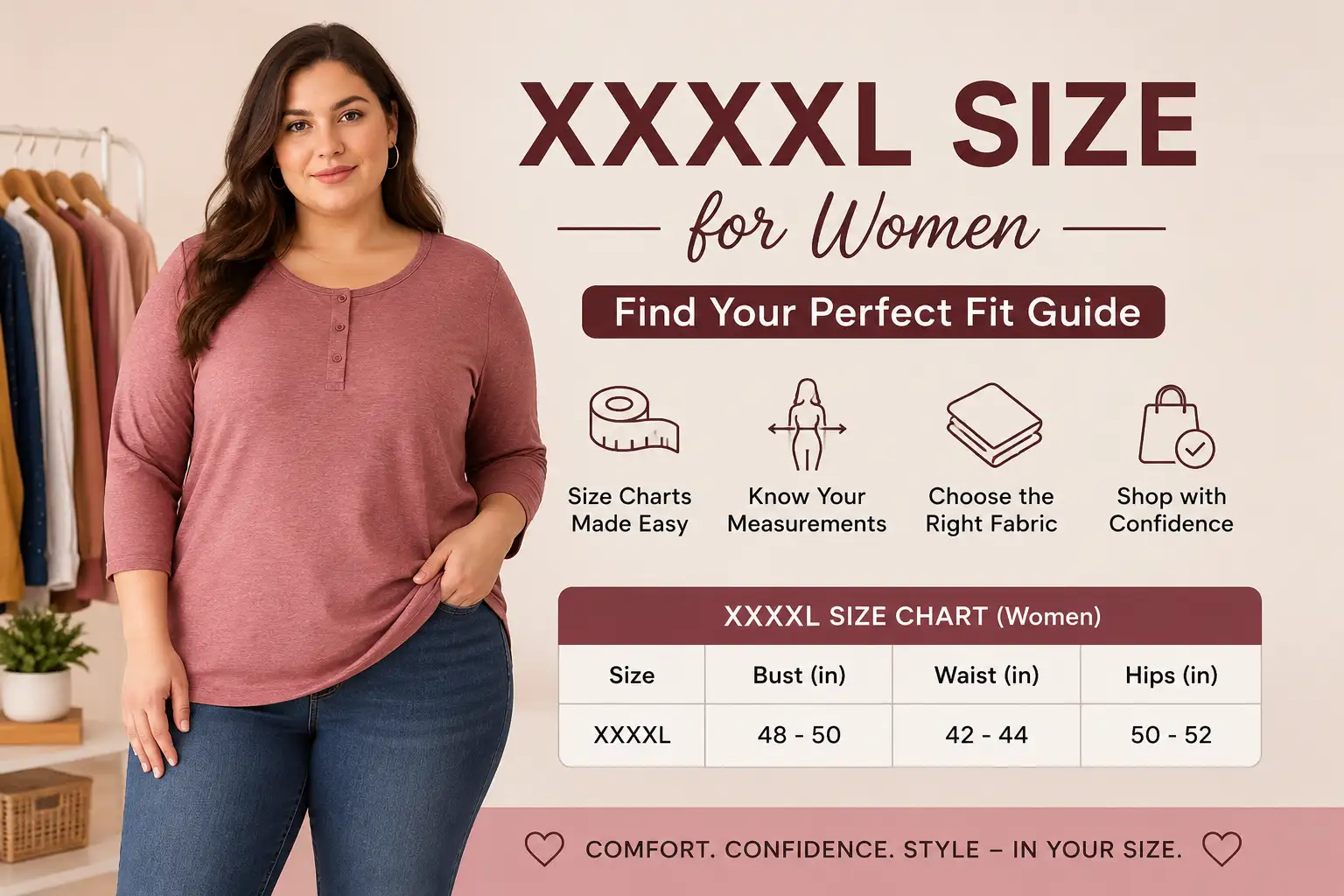
Buying clothes online should be exciting, but for many women, choosing the right size can quickly become frustrating. You finally discover a top or dress that matches your style, order it in XXXXL, and eagerly wait for it to arrive. But when you try it on, the fit isn’t what you expected. It may feel too snug across the bust, loose around the waist, or simply different from how it looked in the product photos.
This situation is more common than you might think. One of the biggest challenges with plus-size fashion is that sizing isn’t consistent across brands. A garment labeled XXXXL by one retailer may fit completely differently from another, even if the styles appear similar.
The good news is that finding the right fit doesn’t have to be complicated. Once you understand how sizing works and what details to check before purchasing, online shopping becomes much easier and far more reliable.
What Does XXXXL Size for Women Actually Represent?
Many shoppers assume that XXXXL follows a universal standard, but that’s rarely the case. Clothing manufacturers use different sizing systems depending on their country, target audience, and production methods.
Some brands rely on international measurements, while others create their own size charts based on customer preferences. Even within the same brand, the fit may vary depending on whether you’re shopping for casual tops, dresses, or trousers.
This is why the size printed on the label should only be considered a starting point. The real key to choosing well-fitting clothing is understanding your own measurements rather than depending solely on a size name.
Why the Same Size Can Fit Differently
There are several reasons why clothing sizes often vary from one brand to another.
Brand-specific sizing
Every clothing company develops its own pattern blocks and grading system, meaning a XXXXL in one collection may differ from another.
Global measurement standards
Sizing used in India, Europe, the United States, and Asia can vary considerably, making international shopping more confusing.
Different garment designs
Relaxed silhouettes naturally fit differently from tailored or body-skimming styles, even when both carry the same size label.
Because of these variations, relying only on your previous shopping experience can sometimes lead to disappointment. Taking a few extra moments to review sizing information before ordering can save time, money, and unnecessary returns.
Why Reading the Size Chart Is So Important
A size chart provides far more useful information than the clothing label itself. Instead of guessing, you can compare your measurements directly with the brand’s recommendations.
Before placing an order, always remember to:
- Measure your bust, waist, and hips carefully.
- Compare your measurements with the chart provided.
- Check whether the listed numbers refer to body measurements or garment dimensions.
- Read any notes about the overall fit, such as relaxed, regular, or slim.
For instance, if your measurements are:
Bust: 49 inches
Waist: 43 inches
Hips: 53 inches
And the garment measurements are slightly larger than yours, you’ll usually have enough room for comfortable movement. If the garment measurements closely match your body measurements, the fit may feel more structured, especially when the fabric has little or no stretch.
Essential Measurements Every Woman Should Know
Knowing your body measurements is one of the easiest ways to improve your online shopping experience.
The most important measurements include:
Bust
Wrap the measuring tape around the fullest part of your chest while keeping it level without pulling too tightly.
Waist
Measure around your natural waistline, which is generally the narrowest area between your ribs and hips.
Hips
Stand with your feet together and measure around the fullest part of your hips for the most accurate result.
Shoulders
Shoulder width becomes particularly important when selecting structured garments or plus size tops for women, helping ensure a comfortable fit across the upper body.
Quick Measuring Tip
For the most accurate measurements, wear lightweight clothing or measure directly over your undergarments. Keep the tape comfortably snug—not tight—and stand naturally without holding in your stomach. If possible, ask someone to help, especially when measuring your shoulders or back.
Understanding Body Measurements and Garment Measurements
Many shoppers confuse body measurements with garment measurements, even though they refer to two different things.
Body measurements describe your actual physical dimensions.
Garment measurements indicate the size of the clothing item itself.
Most garments are intentionally made slightly larger than the body measurements they are designed for. This additional space is known as ease, allowing comfortable movement throughout the day.
Relaxed outfits generally include more ease, while fitted garments are designed with less extra room. Understanding this difference helps prevent choosing clothing that feels either restrictive or excessively oversized.
How Fabric Influences the Overall Fit
The material used in a garment has a significant impact on how it fits and feels after wearing.
Fabrics blended with elastane or spandex usually offer greater flexibility and move comfortably with your body. These materials often provide a forgiving fit even when the measurements are close.
On the other hand, woven fabrics such as pure cotton, linen, or certain rayon blends have limited stretch. With these materials, selecting the correct size becomes even more important because the garment won’t expand during movement.
Checking the fabric composition before purchasing allows you to make better sizing decisions and avoid unexpected surprises once the item arrives.
Read Product Descriptions Carefully Before Ordering
While size charts are essential, product descriptions provide additional details that can help you choose the right fit with greater confidence.
Many brands include useful information such as the fabric type, garment silhouette, and styling recommendations. Some product pages also mention the model’s height, body measurements, and the size being worn, making it easier to compare with your own proportions.
Before making a purchase, take a moment to review:
- Fabric composition
- Fit description (regular, relaxed, oversized, or tailored)
- Model height and measurements
- Length of the garment
- Care instructions that may affect shrinkage or fabric behavior
These details often provide a much clearer picture than the size label alone and can help you select clothing that matches both your preferences and body shape.
Learn from Customer Reviews
Customer reviews are one of the most valuable resources when shopping online. They often reveal practical information that isn’t always included in the official product description.
Previous buyers frequently share insights about:
- Whether the garment fits true to size
- If it feels tighter or looser than expected
- Fabric quality and comfort
- Sleeve and garment length
- How the clothing fits after washing
When several customers mention similar observations, you can use that feedback to decide whether to stick with your usual size or consider another option.
Reviews become especially helpful when purchasing from a brand for the first time.
Fit Varies Across Different Clothing Categories
Not every clothing category fits in the same way, even if the size remains identical.
For example:
Tops
When selecting plus size tops for women, pay close attention to the bust, shoulder width, and sleeve measurements. These areas largely determine overall comfort and mobility.
Dresses
For dresses, the bust, waist, and hip measurements all work together to create the right fit. The dress style—whether fitted, A-line, or flowy—also affects how it sits on the body.
Bottoms
When buying trousers, jeans, or leggings, hip circumference, thigh width, inseam, and rise become the most important measurements for comfort and ease of movement.
Traditional outfits may offer a naturally relaxed fit, while many Western styles feature more structured tailoring. Understanding these differences allows you to choose each garment more confidently.
Common Mistakes That Can Affect the Fit
Even experienced online shoppers sometimes make simple sizing mistakes.
Some of the most common include:
- Ordering a larger size without checking the size chart
- Ignoring shoulder measurements for structured clothing
- Assuming every brand follows the same sizing standard
- Focusing only on the size label instead of garment measurements
- Forgetting to consider the fabric’s stretch
The best-fitting clothes aren’t always the largest or smallest—they’re the ones that match your body measurements and the garment’s intended design.
Choose Clothing That Balances Comfort and Style
Looking stylish doesn’t mean sacrificing comfort. The best outfits are those that fit naturally while allowing you to move with confidence throughout the day.
When shopping, consider garments that offer:
- Silhouettes suited to your body shape
- Comfortable fabrics for everyday wear
- Enough room for natural movement
- Designs that complement your personal style
Well-fitted clothing creates a polished appearance without feeling restrictive, making it easier to enjoy both comfort and fashion at the same time.
Small Alterations Can Create a Better Fit
Even if you select the correct size, minor tailoring can make your clothing look and feel even better.
Simple alterations may include:
- Adjusting sleeve length
- Shortening hems
- Taking in the waist slightly
- Fine-tuning the overall silhouette
These small modifications can transform a good fit into one that feels custom-made. Tailoring isn’t about fixing poor sizing—it’s about enhancing the way a garment complements your body.
Finding the Right Fit Becomes Easier with the Right Approach
Choosing the perfect XXXXL size for women doesn’t have to involve uncertainty. Once you understand your body measurements, compare them with accurate size charts, and pay attention to garment details, shopping online becomes much more predictable.
Instead of relying only on size labels, consider factors such as fabric, fit description, garment measurements, and customer feedback before making your decision. These small steps can make a significant difference in how your clothes fit and feel.
As you become more familiar with your proportions, selecting well-designed plus size clothing for women becomes a far more enjoyable experience. Whether you’re shopping for comfortable everyday wear, elegant dresses, or stylish plus size tops for women, the right fit helps you feel confident, comfortable, and ready for every occasion.
FAQs
1. How do I know if XXXXL size will fit me?
The best way to determine whether XXXXL size will fit is by measuring your bust, waist, and hips and comparing them with the brand’s size chart. Since sizing varies across brands, body measurements are more reliable than size labels.
2. Why does XXXXL clothing fit differently from one brand to another?
Each clothing brand uses its own sizing standards, pattern grading, and garment cuts. Fabric type, design, and country-specific sizing systems can all influence how a XXXXL garment fits.
3. Should I buy a larger size if the fabric has no stretch?
If a garment is made from non-stretch fabrics like cotton or linen, choosing a slightly roomier fit can improve comfort. Always review the size chart and garment measurements before making a purchase.
4. What measurements are most important when shopping for plus size clothing?
The most important body measurements include your bust, waist, hips, and shoulders. These measurements help you select clothing that fits comfortably and matches your body proportions.
5. Can tailoring improve the fit of plus size clothing?
Yes. Simple alterations such as adjusting sleeve length, hemming dresses or pants, or shaping the waist can significantly improve the overall fit and make clothing feel more personalized.